In a Year of ‘Unprecedented Growth’, Damian Speirs Analyses Digital and Tech Hiring Trends
Deprecated: Function get_page_by_title is deprecated since version 6.2.0! Use WP_Query instead. in /home/runcloud/webapps/heat2022-staging/public/wp-includes/functions.php on line 6131

To give enhanced context and insight to our 2022 Salary Survey, we asked our Associate Directors to give us their key take-outs and perspectives from the year in business, and to reflect on the hiring trends that they foresee continuing to impact the market in the year ahead. Read on for Damian Speirs’ take-outs from the Digital and Tech sector.
Key Take-Outs
• We are seeing an increasing shortage of suitably qualified software engineers and DevOps professionals
• Vacancies are being driven by unprecedented growth in this sector
• If firms want to recruit the top talent they need to review and streamline interview processes
• Firms need to ensure that remuneration packages are as competitive as possible
• Candidates are looking to ensure firms offer hybrid working and clear career paths
Our sector is fortunate to be central to the government’s stated objectives and funding initiatives, and all research and capital investment is of course welcome. But, while the allocation of government funding into science and technology is very likely to have an impact in the future, we are experiencing a marked skills shortage for qualified and experienced engineers in the here and now which is likely remain for some time. Through the process of supply and demand, this shortage will continue to drive salaries upwards over time.
Although there is a tendency to shift blame for the skills shortage onto the pandemic, the CIPD have released a report which highlights that the skills shortage was actually already prevalent in the UK prior to the onset of the pandemic, with 4 in 10 employers currently struggling to fill roles, as opposed to the pre-pandemic figure of 36%. It isn’t enough for employers to ‘wait and see’ and work on the assumption that a return to more ‘normal’ working conditions will be sufficient to tackle the skills gap. This is a challenge that needs to be actively resolved.
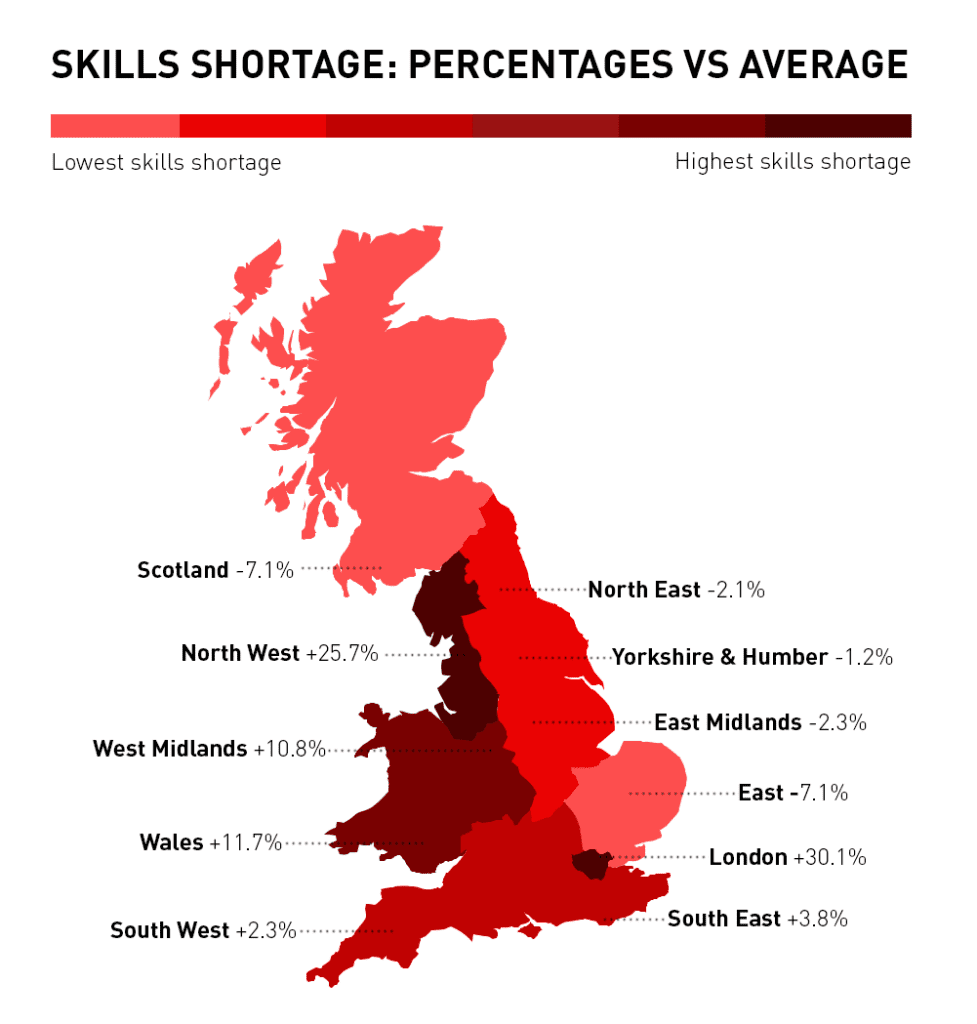
For firms who are looking to fill vacancies with top candidates, my advice would be to review their entire interview process. What we have seen across the board is that firms who continue with a lengthy interview process are losing out on top talent to those companies who are moving quicker and making offers after single interviews. A shortage of candidates and an increasing skills gap has pushed salaries up, and firms need to ensure a full range of benefits packages are available to make them stand out from the rest. However, when we look at the competitive drivers for people moving positions it is clear that availability of hybrid working and career development are as important as the salary packages on offer.
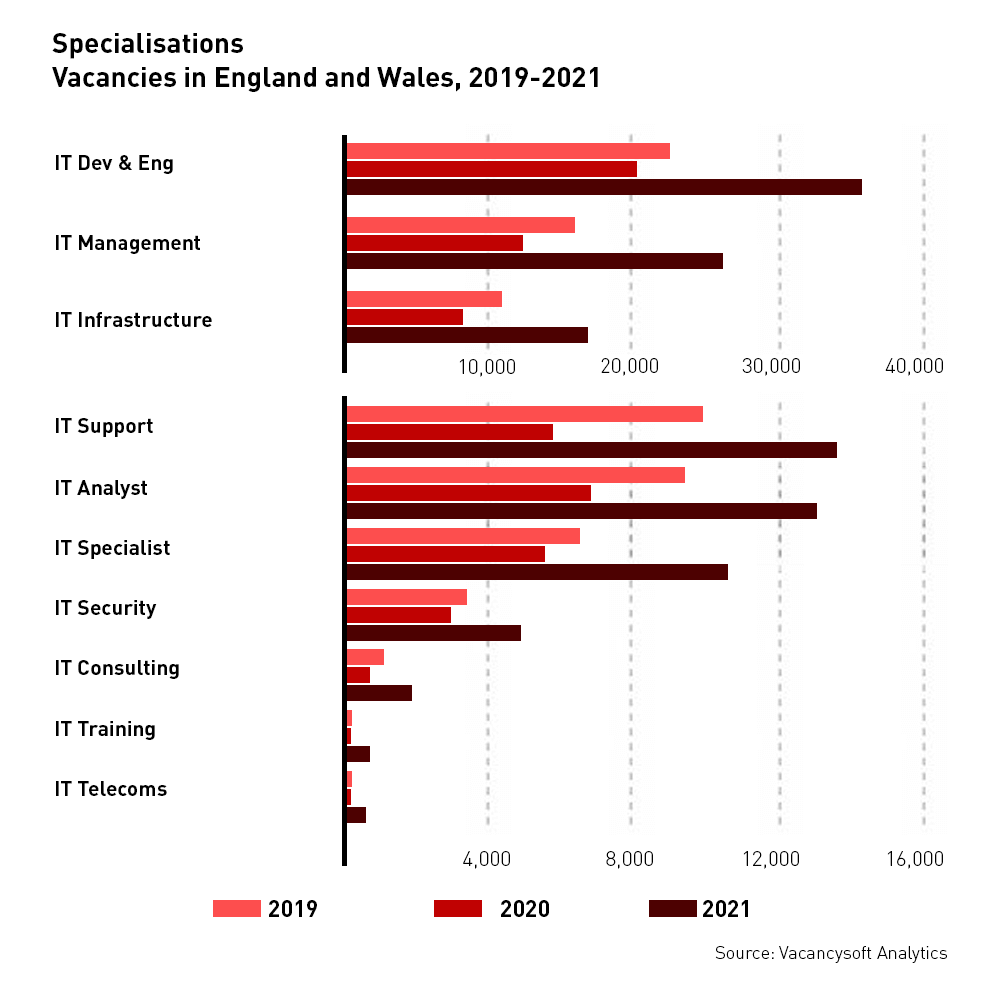
As evidenced in the data above, we have seen a continued and sustained level of growth in vacancies for IT roles across the board year on year and this growth is expected to continue in all areas into 2022 and beyond.
Download your 2022 Salary Survey today
Damian Speirs
Senior Managing Consultant, Digital and Tech